
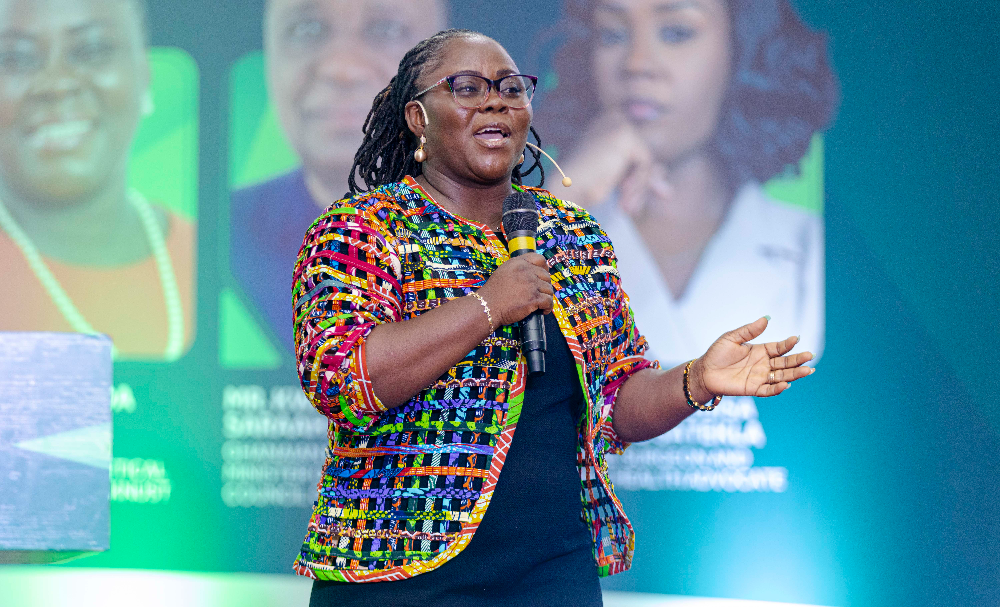
Self-doubt, failure and unexpected academic paths should not define a student’s limits, Prof. Mrs. Linda Aurelia Ofori told students at KNUST, urging them to resist belittlement, ask questions and see service to society as the true test of education.
Prof. Mrs. Linda Aurelia Ofori, a senior academic at the Department of Theoretical and Applied Biology at the Kwame Nkrumah University of Science and Technology (KNUST), Kumasi has urged students to reject self-doubt and look beyond classroom success to meaningful service to society.
Speaking at the 2026 Nyansapo Dialogue Series, Prof. Mrs Ofori recounted her academic journey, revealing that her entry into Biological Sciences in 1999 came after an unsuccessful attempt to gain admission into medical school.
“I entered Biological Sciences as a disappointed medical student,” she said. “It was my third choice. The plan was that in my second year, I would change.”
Her perspective, however, shifted after an encounter that challenged her assumptions about academic prestige.
“I met an expatriate miner who had studied Biological Sciences,” she recalled. “I asked myself, ‘This white man did Biological Science?’ That was when my thinking began to change.”
Despite the renewed interest, her second year came with academic and emotional challenges. She recalled struggling through a difficult mid-semester examination in Biological Chemistry.
“There were six questions on the paper, and I started crying in the exam room,” she said. “When the scripts were returned, I saw my marks and realised I had to work much harder.”
That experience, she said, taught her one of the most important lessons she now shares with students.
“Not everyone in your class will make you feel good, and some may even make you feel small,” she said. “Never allow yourself to be belittled. You are not daft. There is no daft person in this university.”
Her academic turning point came in her final year, during a research project assessing microbial quality of water sources in the Ayeduase township. Rising early to collect water samples, she said, helped her see the direct link between science and society.
“My excitement was realising that there are hidden agents out there that can harm us if we do not find them,” she said.
From that experience, she drew another enduring lesson for students.
“After the classroom work, the real service is out there, with the people in your community, in your home, in your room,” she said. “Everything you see should make you ask questions.”
Encouraged by friends and mentors, Prof. Mrs. Ofori pursued postgraduate studies and eventually became a lecturer in the same department.
“I realised I needed to let the university pass through me,” she said.
She also urged students to value relationships and networks formed during their time on campus, noting that growth often comes through people rather than formal processes.
“This life is lived with the people you meet,” she said. “Many more people are reading you than you can imagine. Someone you pass every day may know somebody who knows somebody you are looking for.
By: Emmanuel Kwasi Debrah


